How Post-Purchase Order Changes Improve Repeat Purchase Rates in Shopify
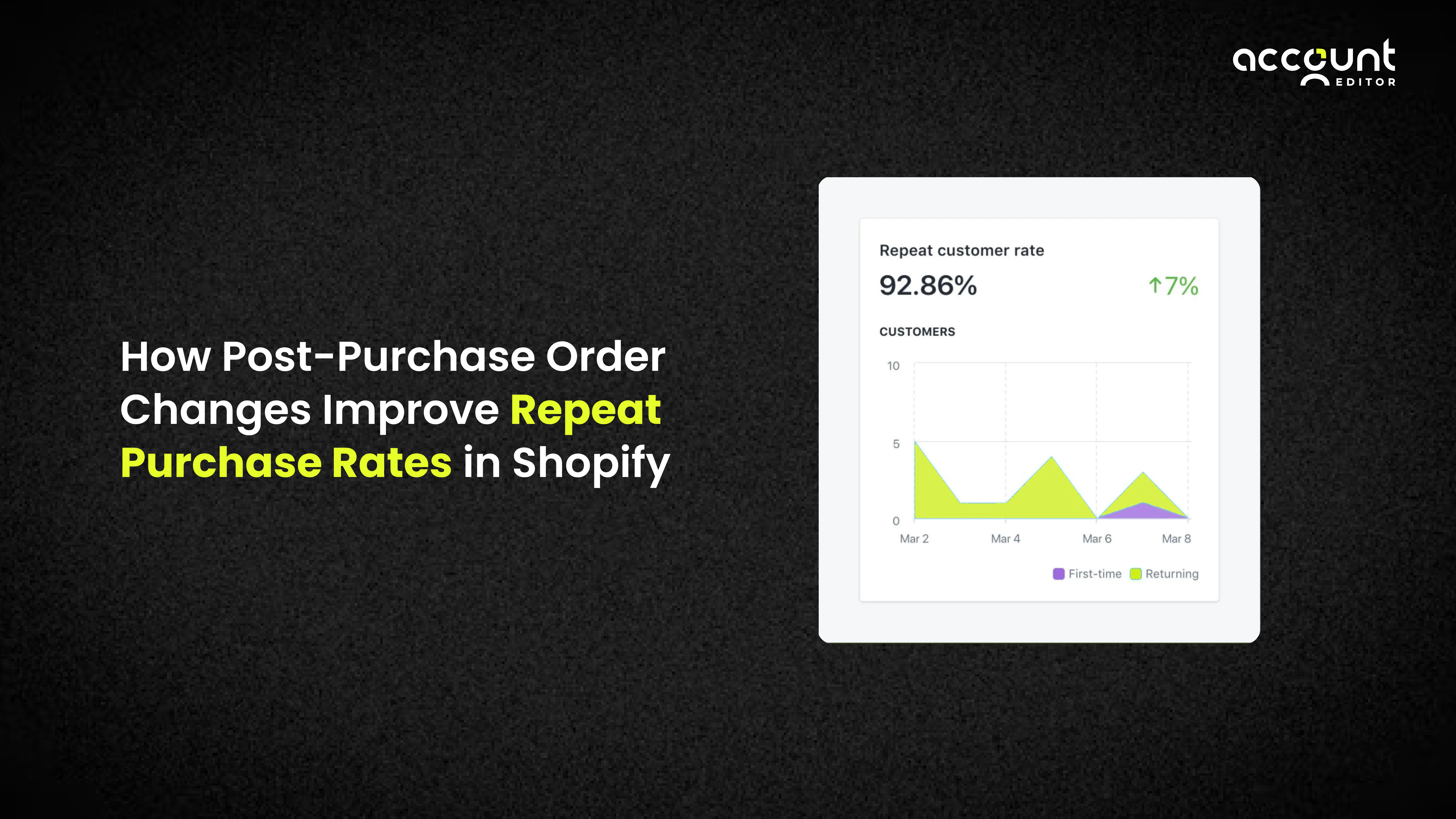
Most Shopify merchants invest heavily in getting new customers. They run ads, build email funnels, and focus on traffic growth. But real profitability does not come from the first order. It comes from repeat purchases.
According to research published in Harvard Business Review based on Bain & Company data, increasing customer retention by just 5% can increase profits by 25% to 95%.
This makes repeat purchase rate one of the most important eCommerce metrics.One often overlooked way to improve retention is through post-purchase order changes. When customers can edit their orders after checkout, it reduces friction and increases trust, two key drivers of customer loyalty.Post-purchase order changes improve repeat purchase rates in Shopify by reducing friction after checkout. Because Shopify does not allow customers to edit orders by default, merchants must use a structured Shopify order editing solution like Account Editor to enable safe, rule-based post-purchase editing.
Why Repeat Purchase Rate Is Critical for Shopify Growth
Repeat purchase rate measures the percentage of customers who make more than one purchase from your store within a specific period. It is a key indicator of customer retention and long-term revenue stability. A higher repeat purchase rate typically means customers are satisfied with their experience, trust the brand, and find value in the products. For Shopify merchants, improving retention through higher repeat purchases reduces reliance on continuous customer acquisition and increases overall profitability.
1. Retention Is More Profitable Than Acquisition
Acquiring new customers involves consistent spending on paid advertising, content marketing, search engine optimization, social media campaigns, and promotional discounts. These efforts require ongoing investment because new audiences must be reached, persuaded, and converted. In contrast, retaining existing customers is generally more cost-efficient because the initial trust and brand awareness have already been established.
Research published by Invesp highlights this difference clearly, stating that acquiring a new customer can cost up to five times more than retaining an existing one.
This cost gap exists because returning customers do not need the same level of persuasion. They are already familiar with the brand, understand the purchasing process, and have previous experience with the product or service.
Over time, repeat customers typically generate higher cumulative revenue through multiple purchases. Since they require less marketing effort per transaction and often convert at higher rates than first-time visitors, they contribute more efficiently to overall revenue. This directly increases customer lifetime value (LTV), which is a key metric for long-term eCommerce growth and profitability.
2. Repeat Purchases Strengthen Long-Term Revenue
When customers return multiple times, revenue becomes more stable. Higher repeat purchase rates reduce churn and build predictable growth. Retention supports sustainable ecommerce expansion.
The Role of the Post-Purchase Experience
The post-purchase experience begins the moment a customer completes checkout. It includes every interaction that happens after payment is made, such as receiving the order confirmation email, tracking shipping updates, contacting support if needed, and reviewing the order. This stage is often overlooked, yet it plays a critical role in shaping customer perception.
During this period, customers are highly attentive. They look for reassurance that their payment was successful, that their order details are correct, and that delivery will happen as expected. Clear communication, smooth updates, and easy access to order management features all contribute to a sense of reliability. If this experience feels organized and responsive, customers associate the brand with professionalism and trust. If it feels slow or confusing, doubts can grow. Because of this, the post-purchase stage strongly influences how customers remember the brand and whether they feel confident returning for another purchase.
1. What Happens Emotionally After Checkout
After placing an order, many customers experience a moment of uncertainty. They may revisit their decisions and wonder if they selected the right product, entered the correct details, or made the best choice. This feeling is often referred to as post-purchase dissonance, a natural reaction that can happen after making a purchase.
If customers cannot easily correct small mistakes, such as updating a shipping address or adjusting an item, that uncertainty can turn into frustration. When frustration increases, overall satisfaction decreases. A smooth and flexible post-purchase experience helps reduce this tension and strengthens customer confidence in the brand.
2. Why Control Builds Trust
When customers are able to update their shipping details or modify items in their order, they feel a greater sense of control over their purchase. Instead of worrying about small mistakes or contacting support for help, they can resolve issues quickly on their own. This sense of control reduces the feeling of regret that sometimes follows a purchase decision. When regret decreases, confidence in the brand grows. Over time, that confidence builds trust, and trust plays a key role in encouraging customers to return and make future purchases.
How Post-Purchase Order Changes Reduce Churn
Churn happens when customers choose not to return after their first purchase. In many cases, this decision is not caused by the product itself, but by friction experienced during the buying journey. Friction can appear in different forms, such as delayed support responses, difficulty correcting order details, unclear communication, or a lack of flexibility after checkout. Even small frustrations can leave a lasting negative impression.
1. Eliminating Support Friction
Without editing options, customers must contact support for changes. This creates delays and increases support ticket volume.
When self-service editing is available, customers resolve issues instantly. Faster resolution improves satisfaction.
2. Preventing Unnecessary Cancellations
Many cancellations happen because customers panic over small mistakes. Allowing post-purchase order changes prevents avoidable refunds and protects revenue.
Lower cancellations mean lower churn and stronger retention.
Shopify’s Native Limitation on Customer Order Editing
Understanding Shopify’s default functionality is important for merchants who want to improve customer retention through post-purchase flexibility. By design, Shopify does not natively allow customers to edit their own orders after checkout. Once an order is placed, customers cannot change shipping details, adjust quantities, swap products, or cancel directly from their account.
Instead, any modifications must be handled manually by store staff through the Shopify Admin. This means customers need to contact support and wait for assistance if they want to correct even a small mistake.
While this setup helps maintain order integrity, it also limits self-service options and can create additional workload for support teams. For merchants looking to enhance the post-purchase experience and reduce friction, understanding this limitation is the first step toward finding a structured solution.
1. What Shopify Allows by Default
Only store administrators can modify orders through the Shopify backend. Once an order is placed, it becomes accessible for editing only inside the Shopify Admin dashboard. This means that any changes, such as updating a shipping address, adjusting quantities, removing items, or processing cancellations, must be handled manually by the merchant or their support team before fulfillment.
2. Why This Creates Operational Pressure
Manual order edits increase support workload because staff must review each request, access the order in the Shopify Admin, apply the changes, and often coordinate with the fulfillment team if the order is already being processed. As order volume grows, this manual workflow can slow response times, create bottlenecks, and delay shipments, especially during peak periods.
To introduce flexibility without disrupting operations, merchants need a specialized Shopify app. Solutions like Account Editor let customers to modify their orders directly from the Thank You page or Order Status page within clearly defined rules. Merchants can control what can be edited and for how long, reducing customer friction while maintaining operational stability and oversight.
Enabling Post-Purchase Order Changes Safely in Shopify
Introducing order editing does not mean giving up operational control. Shopify merchants can configure structured rules that define how and when changes are allowed.
This includes setting time limits for edits, restricting specific products from being modified, controlling cancellation conditions, and managing how payment adjustments are handled.
By applying clear parameters, merchants can offer customers flexibility while protecting fulfillment workflows, inventory accuracy, and financial processes. This structured approach ensures that post-purchase order changes enhance the customer experience without disrupting operational stability.
1. Setting Editing Timeframes
Merchants can define how long customers are allowed to edit orders, such as 30 minutes, 2 hours, or until fulfillment and can manage what can be edited.
This prevents late-stage disruptions.
2. Managing Shipping and Tax Recalculations
When customers update their address, shipping rates and taxes can be recalculated automatically. This ensures accuracy and avoids manual corrections.
3. Controlling Risk with Editing Restrictions
Editing can be restricted for certain products or tagged orders. For example, custom-made items can be excluded.
This structure allows merchants to improve customer experience without increasing risk.
The Psychological Retention Loop
Customer retention is influenced not only by product quality and pricing, but also by how customers feel during and after the purchasing process. The post-purchase stage plays a significant role in shaping overall satisfaction. When customers are given the ability to edit their orders, it changes their perception of control and support. Instead of feeling locked into a decision, they understand that minor mistakes can be corrected. This flexibility reduces uncertainty and strengthens confidence in the brand. Over time, consistent positive experiences during these moments contribute to stronger retention and higher repeat purchase behaviour.
How Order Editing Influences Repeat Purchases
After completing checkout, customers typically enter an evaluation phase where they reflect on their purchase decision. During this stage, even small uncertainties, such as a possible shipping error or product selection concern, can influence overall satisfaction.
When customers are given the ability to edit their order, several important shifts occur:
They recognize that minor mistakes can be corrected.
Their perception of flexibility increases.
Uncertainty is reduced.
Confidence in the purchase process strengthens.
The ability to resolve small issues immediately prevents frustration from building. Instead of feeling locked into a decision, customers feel supported.
Over time, these consistent positive post-purchase interactions strengthen trust in the brand. Increased trust contributes directly to higher customer retention and improved repeat purchase rates in Shopify stores.
Post-Purchase Upsells and Retention
Post-purchase order changes do more than reduce friction; they also create opportunities to increase average order value (AOV) without interrupting the checkout experience. Once a transaction is completed, customers enter a confirmation stage where engagement remains high. This moment is where Account Editor allows merchants to present additional relevant offers without disrupting the initial purchase decision.
Unlike pre-checkout upsells, post-purchase offers do not create cart abandonment risk because the primary payment has already been processed. This makes the post-purchase stage a strategic opportunity for revenue optimization while maintaining a smooth customer journey.
Why Post-Purchase Upsells Convert Well
After checkout, buyer intent typically remains strong. Customers have already demonstrated purchase commitment, which means they are more receptive to complementary or related product suggestions.
Presenting relevant offers at this stage can:
Increase average order value
Improve product discovery
Encourage add-on purchases
Strengthen engagement immediately after checkout
Account Editor highlights the effectiveness of post-purchase upselling in its ecommerce resources:
When post-purchase upsells are combined with structured order flexibility, the overall experience feels cohesive rather than disruptive. Customers can adjust their order if needed and accept additional offers within the same controlled environment.
Over time, this approach supports both short-term revenue growth and long-term retention. By enhancing the post-purchase experience, merchants can improve satisfaction while increasing repeat purchase potential.
Conclusion
Post-purchase order changes improve repeat purchase rates in Shopify because they address one of the most sensitive moments in the customer journey, the period immediately after checkout. By allowing customers to correct small mistakes, update order details, or make adjustments within defined limits, merchants reduce friction and prevent unnecessary cancellations. This flexibility strengthens customer confidence and reinforces trust in the brand.
Since Shopify does not allow customers to edit their own orders by default, merchants who want to improve retention must implement a structured, rule-based solution. Account Editor enables controlled post-purchase editing directly from the Order Status page, giving customers convenience while preserving operational stability.
When the post-purchase experience feels smooth, responsive, and flexible, customers are more likely to return. Over time, this leads to higher repeat purchase rates, stronger customer lifetime value, and more sustainable ecommerce growth.
Give your customers the flexibility they expect, without increasing support workload. Start enabling post-purchase order edits with Account Editor today.