Customer Retention: The Key to Shopify Store Growth in 2026
Imagine this: a new restaurant launches with a big opening night, packed with curious diners. But if the food and service don't bring people back, the buzz fades, and empty tables remain. eCommerce works the same way, such that customer acquisition fills the room once, but retention is what keeps it alive. In 2026, with ad costs skyrocketing and competition tougher than ever, Shopify merchants that focus on retention will build lasting, profitable growth.
According to research, acquiring a new customer can cost five to twenty five times more than keeping an existing one. With numbers like that, it's no surprise that leading brands are investing heavily in retention programs.
In this guide, we'll break down what customer retention really means, why it matters, how to measure it, and how your post-purchase experience can transform one-time buyers into lifelong customers.
What Is Customer Retention in Shopify?
At its core, customer retention is about one simple idea: how well your Shopify store keeps customers coming back.
While acquisition focuses on generating new sales, retention measures your ability to turn first-time buyers into repeat shoppers. A strong retention strategy means your customers not only return but also buy more often, spend more per order, and become advocates for your brand.
In other words, retention isn’t just a metric; rather, it’s the foundation of sustainable grow
Definition: Customer retention is the ability of a Shopify store to turn first-time buyers into repeat customers through post-purchase experience, loyalty, and ongoing value delivery.
Why Customer Retention Matters for Your Shopify Store in 2026
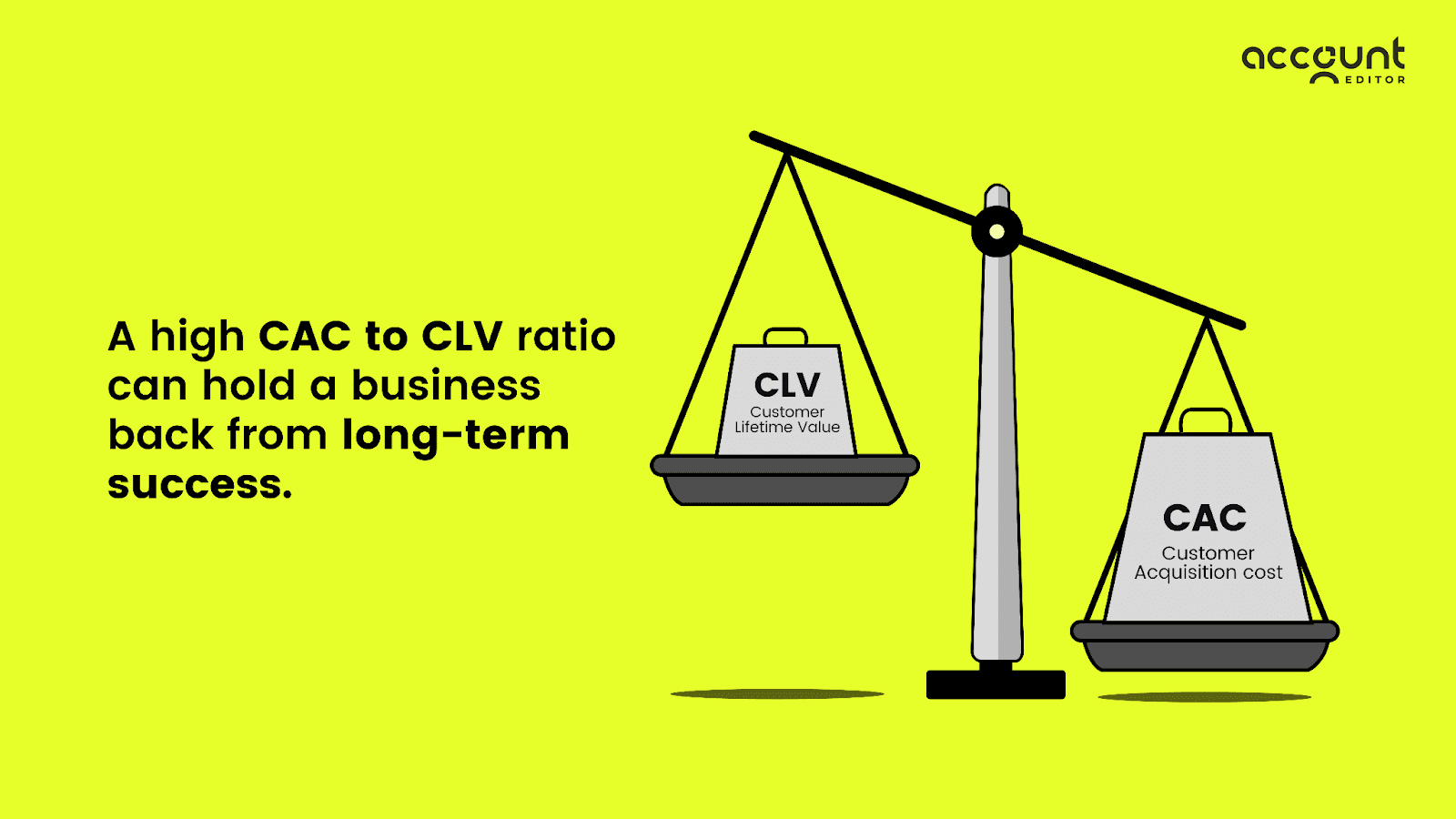
Retaining customers isn’t just about keeping people happy rather it’s about driving consistent, profitable growth. Here are some reasons why focusing on retention gives Shopify merchants a competitive edge in 2026:
1. Retention Is Far Cheaper Than Acquisition
Acquiring new customers through ads or promotions is increasingly expensive. Retention, on the other hand, costs far less; keeping existing customers can be up to 7x cheaper than acquiring new ones.
2. Repeat Customers Spend More — And Come Back More Often
Returning customers are more valuable over time. Research shows that repeat buyers spend 67% more per order than first-time customers (Bain & Company). That means every additional purchase strengthens your bottom line without a single extra ad spend.
3. Loyal Customers Become Your Best Marketing Channel
Customers who have a positive experience don’t just buy again; instead, they spread the word. Data says that 92% of consumers trust recommendations from friends and family more than advertising (Nielsen). A strong retention strategy turns satisfied customers into a free marketing channel.
4. Retention Creates Predictable, Scalable Revenue
New customer growth is volatile, but retention creates stability. By focusing on loyalty, you build a base of consistent, repeat purchases, giving you a predictable cash flow that makes forecasting, inventory planning, and scaling much easier.
5. Small Improvements Create Outsized ROI
Even modest gains in retention drive exponential growth. Studies show that Studies show that a 5% increase in retention can boost profits by 25–95% (Harvard Business Review). That means every improvement in your post-purchase journey has a direct ROI.
Customer Retention vs. Acquisition: What's the Real Difference?
• Customer acquisition is the process of attracting new customers through marketing, ads, or promotions. It’s often expensive and highly competitive.
• Customer retention, on the other hand, is about maximizing the value of the customers you already have by keeping them satisfied and engaged.
In today’s climate, where paid ads deliver diminishing returns, retention offers the highest ROI.
For a deeper dive, check out our blog on Customer Retention Strategies vs. Customer Acquisition: Where Should Shopify Stores Invest?
Key Metrics to Measure Customer Retention in Your Shopify Store
To improve retention, you first need to measure it. Here are the key metrics Shopify stores should track:
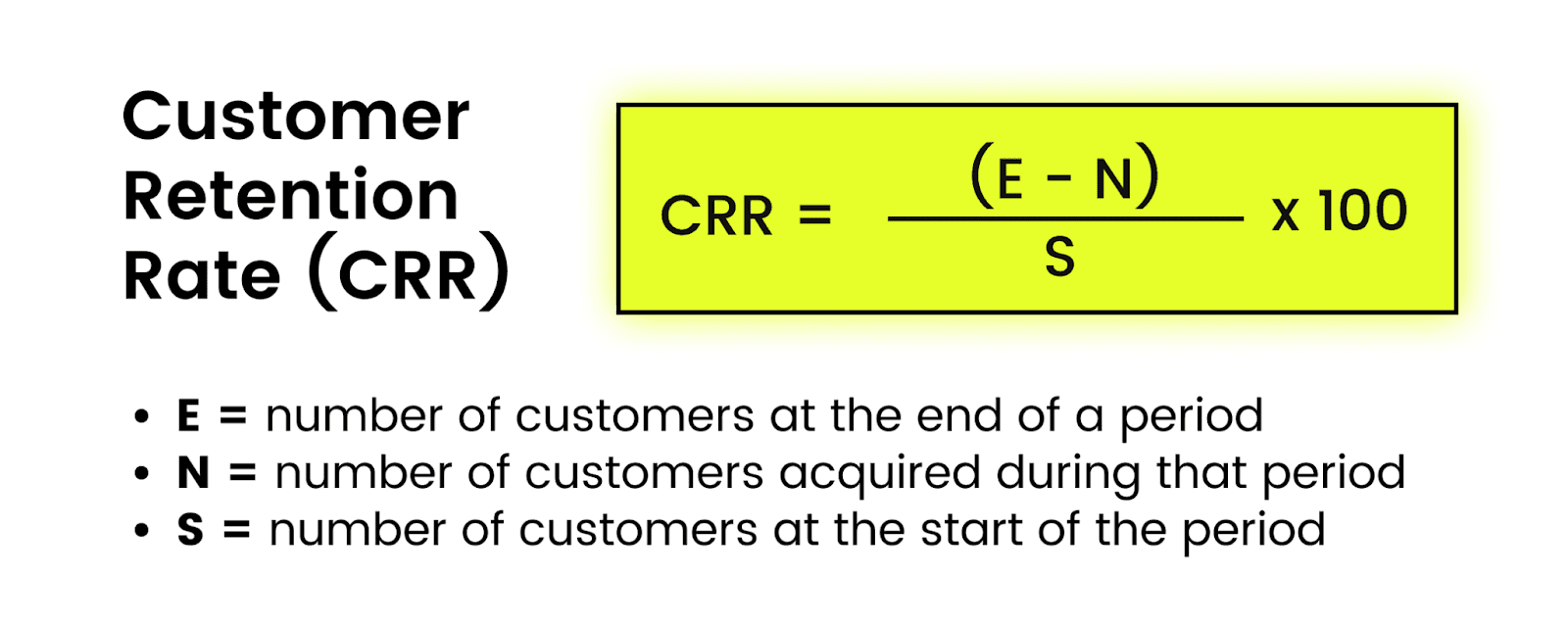
1. Customer Retention Rate (CRR)
What it shows: The percentage of customers your store keeps over a given period.
Why it matters: It’s the baseline metric for understanding loyalty.
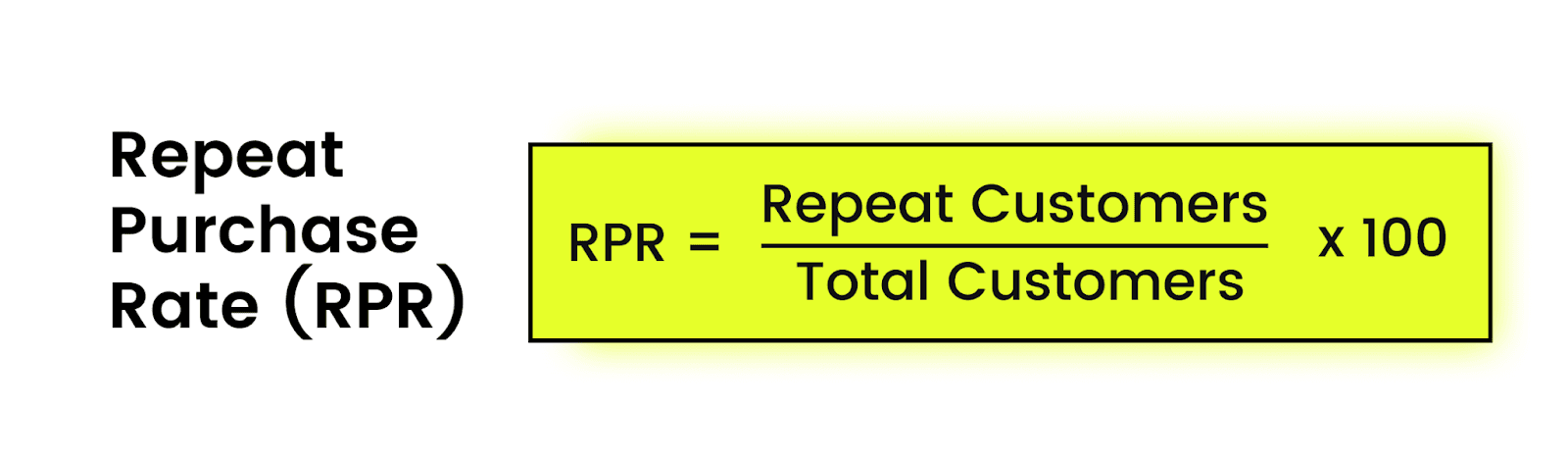
2. Repeat Purchase Rate (RPR)
What it shows: The percentage of customers who make more than one purchase.
Why it matters: Helps identify how effective your store is at driving repeat sales.
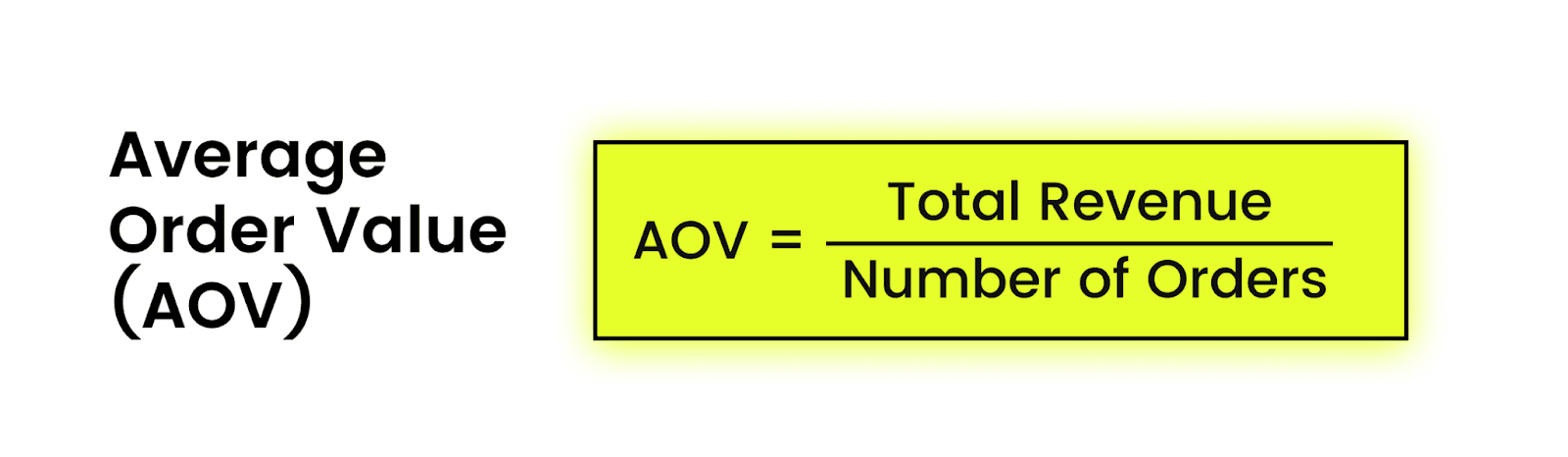
3. Average Order Value (AOV)
What it shows: The average amount a customer spends per order.
Why it matters: When combined with purchase frequency, it reveals overall customer value.
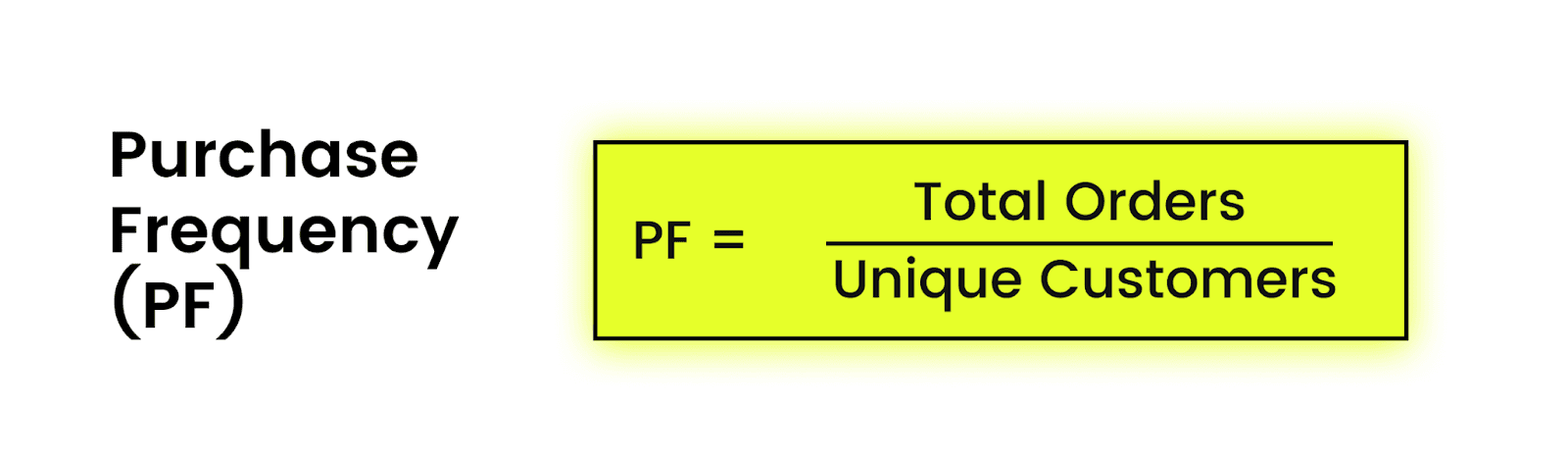
4. Purchase Frequency (PF)
What it shows: How often the average customer buys from your store in a set period.
Why it matters: A higher purchase frequency signals stronger engagement and loyalty.
5. Customer Lifetime Value (CLV)
What it shows: The total revenue you can expect from a single customer over their relationship with your brand.
Why it matters: CLV connects retention efforts directly to profitability.

6. Churn Rate
What it shows: The percentage of customers who stop buying from your store during a given period.
Why it matters: High churn signals poor retention and potential issues in your post-purchase experience.

What's actually behind churn and cancellations: Churn rate is the surface number; the real story is why shoppers walk away. Nearly 20 to 30% of eCommerce orders are cancelled before fulfillment due to post-purchase issues, and the psychology behind that is almost always rooted in friction: delayed or unclear shipping, the inability to fix a wrong address or variant after checkout, pricing surprises that appear after payment, competing offers seen while waiting, and silence between order confirmation and delivery. These are not irrational decisions; they are signals that your post-purchase experience is leaving shoppers without control. For the full breakdown of why customers cancel after checkout and the most common cancellation triggers in Shopify stores, read Why Customers Cancel Orders After Checkout on Shopify.
How the Post-Purchase Experience Directly Impacts Customer Retention
The customer journey doesn’t end when someone clicks “buy.” In fact, what happens after checkout often determines whether that shopper ever comes back. A strong post-purchase experience builds trust, reduces churn, and turns one-time buyers into loyal customers. Here’s how:
1. Self-service builds confidence
When customers can easily fix mistakes like updating an address or swapping a product, they feel in control. This reduces frustration and keeps them from contacting support. Reducing friction here prevents both support tickets and impulsive cancellations.
2. Proactive communication reduces “where’s my order?” tickets
Silence after checkout breeds anxiety. Sending proactive updates and reminders shows customers you value their time. Merchants using proactive post-purchase notifications consistently report fewer inbound support queries and stronger repeat purchase rates, hence freeing up your team and improving satisfaction.
3. Flexible cancellations build trust
Nobody likes feeling locked in. By offering smart, transparent cancellation policies, you reassure customers that their money is safe. This flexibility increases retention because customers are more likely to reorder later when they feel respected.
4. Upsells strengthen loyalty
Upselling isn’t just about higher revenue; it’s about relevance. When customers see curated offers after purchase, it shows you understand their needs. Personalized post-purchase offers can help lift repeat order rates.
5. Localization creates a global connection
Language and cultural fit matter. When customers can read order updates or invoices in their own language, it creates familiarity and trust. That’s why localization is one of the fastest ways to increase retention for international Shopify merchants.
Explore more in our post on How to Use Post-Purchase Experiences to Strengthen Customer Retention Strategies.
Retention is won or lost after checkout: Before checkout, shoppers are deciding what to buy. After checkout, they are quietly deciding whether they made the right choice, and that is where retention is actually shaped. Repeat customers represent only about 21% of buyers but generate roughly 44% of total revenue, which is why the touchpoints between payment and delivery (order confirmation, order changes, shipping updates, support interactions) carry so much weight. The two things customers look for in this window are transparency and control: clear updates that explain what happens next, and the ability to fix small mistakes themselves without waiting for a support reply. For the full breakdown of every post-purchase touchpoint, the trust-and-control relationship that drives loyalty, and the metrics that prove the link, read How Post-Purchase Experience Impacts Customer Retention on Shopify.
The flip side: when post-purchase service fails, cancellations climb: Roughly 32% of customers say they will walk away from a brand they love after just one bad experience, and most of those bad experiences happen after checkout, not before. The biggest drivers are predictable: lack of communication while customers wait, inability to edit or cancel orders without contacting support, complicated processes that force a ticket for every small change, and mismatches between what shoppers expected and what they actually receive. Each of these silently pushes revenue out the door through cancellations, refunds, and lost repeat orders, while adding support cost on the way out. For the full picture of how poor post-purchase service increases cancellations and the specific mistakes to fix first, read How a Poor Post-Purchase Service Increases Cancellations for your Shopify Store.
10 Proven Customer Retention Strategies for Shopify Stores
Retention is multi-layered, but some strategies consistently deliver results. Here’s a quick overview:
1. Enable seamless self-service edits
2. Offer smart cancellations with safeguards
3. Use post-purchase upsells to drive repeat value
4. Automate proactive notifications
5. Reinforce trust with branded invoices
6. Recalculate shipping and taxes instantly
7. Localize the post-purchase experience
8. Reduce failed deliveries with smart address validation
9. Protect high-value orders with payment holds and reverts
10. Leverage customer feedback from cancellations
Read the full breakdown in our blog on 10 Customer Retention Strategies for Growing Your Shopify Store.
How Account Editor Helps Shopify Stores Retain More Customers
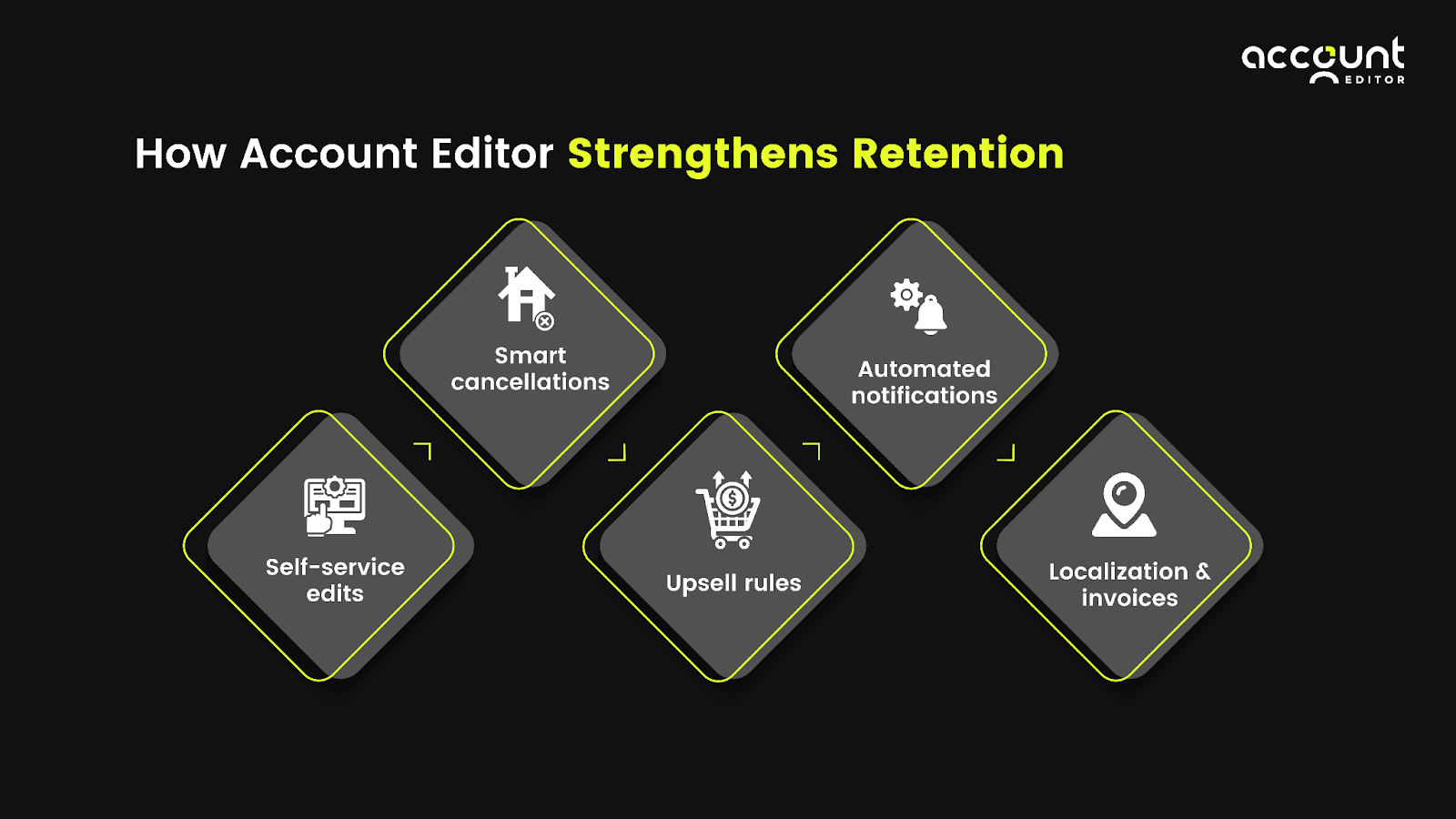
Account Editor (AE) is built to turn post-purchase friction into retention opportunities:
1. Self-service edits: Customers can update addresses, swap products, or add items without contacting support.
2. Smart cancellations: Flexible options with restocking fees to protect your revenue.
3. Upsell rules: Add personalized offers to the thank-you page to increase repeat purchases.
4. Automated notifications: Confirm edits, send reminders, and reassure customers.
5. Localization & invoices: Create a global, professional experience that builds trust.
CTA: Start boosting retention today with Account Editor.
Conclusion: Why Customer Retention Is the Key to Shopify Growth in 2026
Customer retention isn’t a side benefit; rather, it’s the foundation of lasting growth. While ads and promotions might bring in new shoppers, it’s the experience you deliver after checkout that decides whether they’ll return.
By investing in customer retention strategies ranging from self-service edits and smart cancellations to proactive communication and localized experiences, you create a store that customers trust and love to buy from again.
The good news? Small improvements add up fast. A smoother post-purchase journey today can translate into higher repeat orders, stronger word-of-mouth, and more predictable revenue tomorrow.
In today’s scenario, the real secret to Shopify store growth isn’t chasing more clicks; it’s keeping the customers you already have.
CTA: Ready to make retention your growth engine? Start boosting customer retention with Account Editor