
A customer completes their purchase and feels that burst of excitement every merchant loves to create. But just minutes later, the mood shifts. They spot a typo in their shipping address. They realize the size they selected is wrong. Or they suddenly remember the item they meant to add and forgot.
What started as a perfect shopping experience now turns into worry. And where does that anxiety go? Straight to your support inbox.
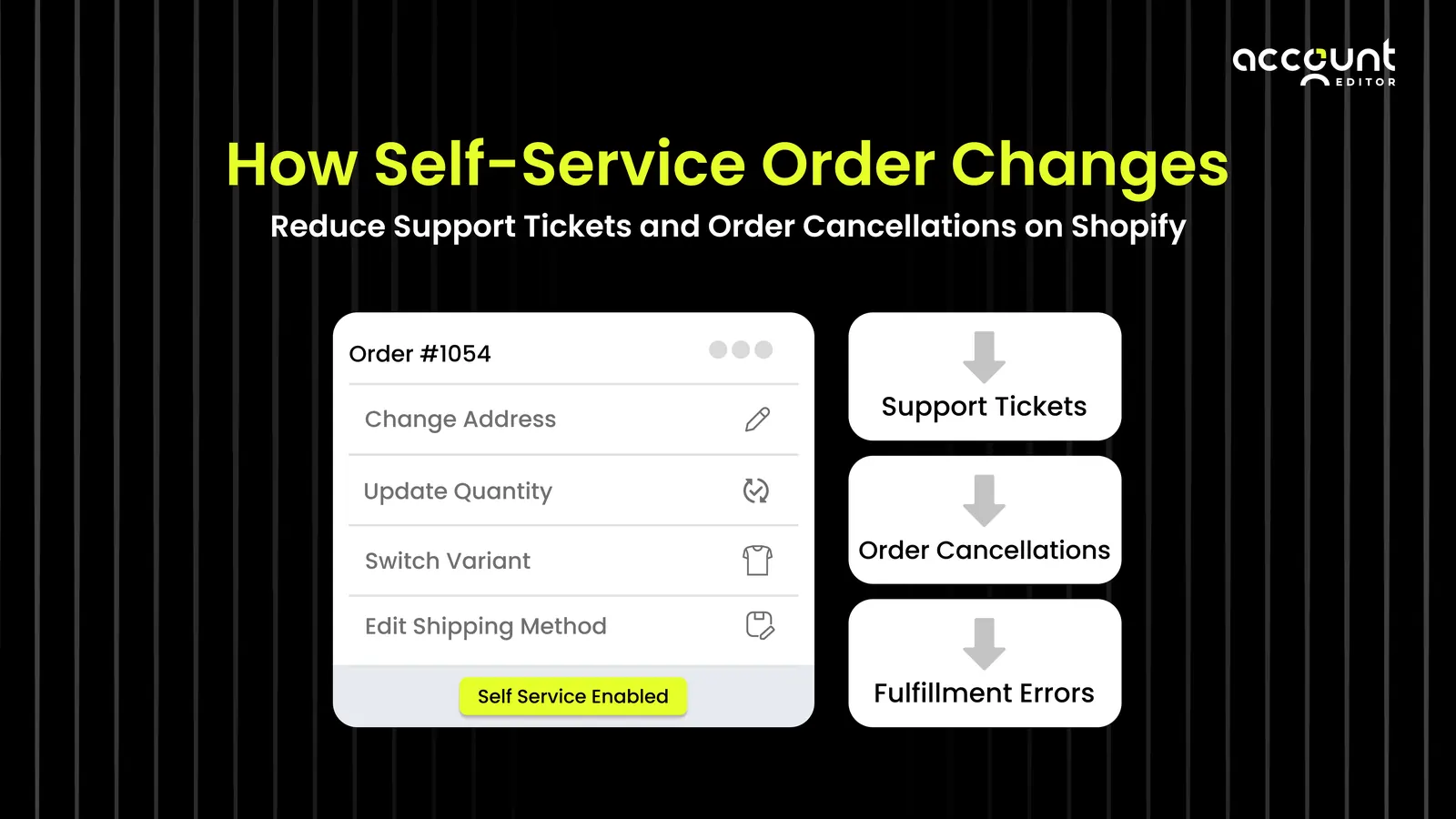
This is exactly why more Shopify brands are adopting self-serve editing as a long-term strategy to reduce support tickets and simplify the post-purchase experience. When customers can fix their own errors instantly, support workload drops, fulfillment stays on track, and customers feel empowered instead of stressed. Self-serve editing doesn’t just solve a problem. It transforms the entire post-purchase journey into something faster, smoother, and dramatically more efficient.
For a deeper understanding of why the post-purchase experience influences customer satisfaction, explore our guide on optimizing the post-purchase experience for Shopify merchants.
Why Post-Purchase Issues Create Heavy Support Ticket Volume
Post-purchase errors may look simple, but they create a disproportionate workload across support and fulfillment teams.
Small Customer Errors Multiply Quickly
Customers often rush through checkout. This leads to predictable mistakes, such as an incorrect postal code or an accidental size selection. Individually, these mistakes are minor, but across hundreds of orders per da,y they result in large volumes of support messages.
Manual Order Editing Interrupts Operations
When a support agent edits an order manually, it requires time and coordination. The agent must open the order, apply the change, notify fulfillment teams, and ensure the update does not disrupt packing or shipping. When this happens repeatedly throughout the day, operations slow down significantly.
Customer Uncertainty Leads to Extra Messages
Because customers are unsure whether support will fix their issue before fulfillment starts, they often send repeat inquiries. A single request can easily turn into multiple messages across different channels.
The Shift Toward Customer-Led Order Management
E-commerce is evolving into a more self-service-driven ecosystem. Customers want flexibility and instant access to post-purchase adjustments.
Shoppers Expect Immediate Control After Checkout
People have become accustomed to digitally modifying reservations, subscriptions, and service preferences instantly. They expect the same ability to correct small online shopping mistakes without waiting for support.
Hiring More Agents Is Not a Scalable Solution
When order volume grows, the number of order correction requests grows with it. Merchants cannot keep hiring support agents to handle repetitive tasks. They need a more efficient, automated approach.
Automation Improves Accuracy and Customer Satisfaction
Allowing customers to manage their own edits removes the risk of miscommunication. The faster the issue is resolved, the better the overall experience.
What Self-Serve Editing Means for Shopify Merchants
Self-serve editing gives customers the ability to update specific order details themselves within rules defined by the merchant.
Types of Customer-Managed Order Edits
Depending on store preferences, customers may be allowed to
• Update their shipping address
• Correct email or phone information
• Change item quantities
• Swap sizes or colors
• Remove or add items
• Cancel their own order before fulfillment begins
This reduces support involvement for the majority of post-purchase correction requests.
Designed to Appear in Familiar Customer Touchpoints
Self-editing options are usually placed where customers naturally return
• The Thank You page
• The Order Status page
• The customer account portal
This makes the post-purchase editing experience intuitive.
Editing Windows Protect Fulfillment Workflow
To prevent late-stage disruptions, merchants set time-based windows for when edits can be made. These windows vary depending on fulfillment speed but ensure that changes occur early in the order lifecycle.
If you want a complete walkthrough of how to implement customer-managed order edits, our Self-Serve Order Editing Guide explains exactly how to set up safe and seamless editing options.
Common Scenarios That Increase Support Ticket Volume
Most support requests come from predictable, recurring issues.
Incorrect Shipping Address
A wrong street name or missing apartment number is one of the most common reasons customers contact support. It is also one of the simplest issues to resolve through self-serve editing.
Wrong Size or Variant
Shoppers frequently realize they selected the wrong option shortly after checkout. Allowing variant swaps without support prevents a large number of correction requests.
Quantity Mistakes
Whether customers accidentally add too many items or forget to include something, quantity adjustments generate consistent ticket volume.
Adding or Removing Items After Checkout
Customers often rethink their cart moments after placing an order. Without self-editing, they rely entirely on support to make these changes.
Cancellation Requests
If customers change their minds, they often feel pressured to reach support before the order ships. Providing a cancellation window reduces urgency and unnecessary communication.
Incorrect Contact Information
Mistyped emails or phone numbers cause missed notifications and tracking updates, which lead customers back to support.
How Self-Serve Editing Helps Reduce Support Tickets Immediately
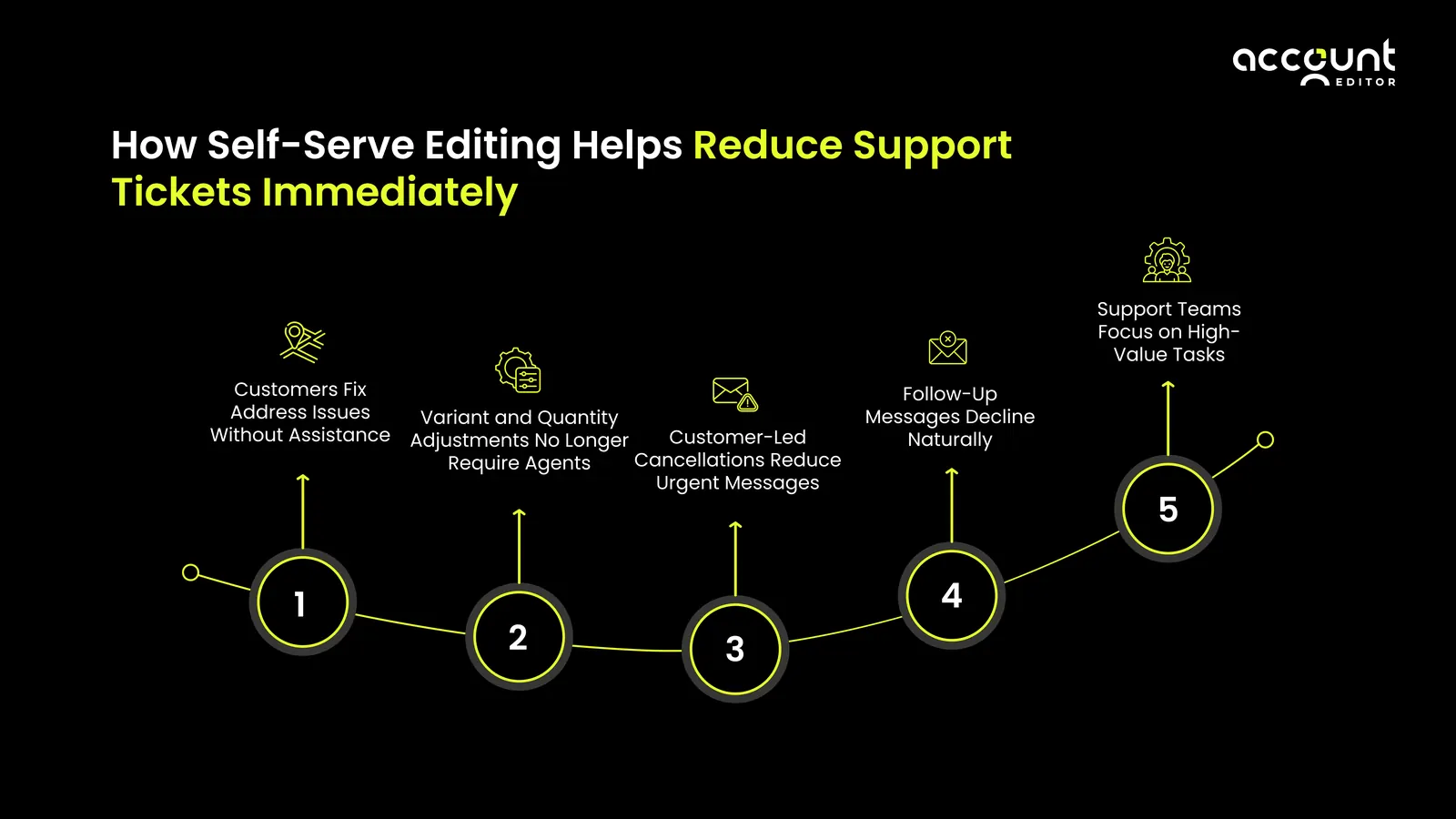
Giving customers the ability to correct simple issues dramatically decreases the number of support interactions.
Customers Fix Address Issues Without Assistance
When customers update their own address, support does not need to intervene. This eliminates one of the most frequent post-purchase inquiries.
Variant and Quantity Adjustments No Longer Require Agents
Customers can change colors, sizes, or item counts themselves, which removes the need for manual edits.
Customer-Led Cancellations Reduce Urgent Messages
When customers can cancel their order during a safe window, they no longer send multiple urgent messages asking support to stop the shipment.
Follow-Up Messages Decline Naturally
Because customers manage edits on their own and receive instant confirmation, they do not send multiple messages seeking reassurance.
Support Teams Focus on High-Value Tasks
Without the distraction of repetitive requests, agents can focus on complex inquiries and personalized assistance.
Operational Benefits of Customer-Led Editing
Self-serve editing not only reduces support tickets but also strengthens fulfillment performance and internal efficiency.
More Stable Fulfillment Workflow
When customers finalize edits early, fulfillment teams work with accurate data from the start. This reduces the need to stop shipments or reprocess orders.
Fewer Manual Errors in Order Processing
Manual edits increase the likelihood of mistakes caused by rushed communication or misinterpretation. Automated customer changes lead to cleaner order information.
Lower Support and Labor Costs
When repetitive tasks disappear, support teams spend less time on manual corrections, which lowers operational costs.
Merchants Maintain Customizable Control
Stores can decide exactly which elements customers may edit ensuring that flexibility never compromises fulfillment rules or product handling.
Accurate Shipping and Billing Details
Early corrections prevent the need for refunds, reshipments, or address-related delivery problems.
Manual Support Workflow vs Customer Self-Editing
Manual Editing Is Slow and Prone to Delays
Traditional workflows involve multiple steps: reading the request, updating the order manually, notifying fulfillment, and confirming with the customer. This slows down operations significantly.
Example A merchant handling hundreds of orders daily may spend several hours each day performing minor corrections that customers could have handled themselves.
Automated Editing Provides Immediate Results
With customer-led editing, shoppers handle updates instantly. Fulfillment receives final order data without interruptions.
Workflow Comparison
Metric | Manual Editing | Customer Self-Editing |
|---|---|---|
Resolution Speed | Slow | Instant |
Risk of Errors | Moderate | Low |
Support Involvement | High | Minimal |
Fulfillment Disruptions | Frequent | Rare |
Customer Satisfaction | Variable | High |
What Shopify Merchants Need for Effective Self-Serve Editing
Time-Bound Editing Windows
Time-restricted editing ensures that customers act within a predictable period, allowing fulfillment teams to work with stable order data.
Customizable Editing Permissions
Merchants decide which parts of an order customers may update, ensuring safety and consistency.
Product or Order-Level Restrictions
Some products, such as personalized items or perishables, require strict limits on editing.
Address Validation for Reliable Delivery
Validating updated addresses reduces reshipment costs and prevents delivery errors.
Smart Cancellation Logic
Cancellations should be allowed only when operationally safe, preventing issues with in-progress fulfillment.
Clear Notifications and Communication
Automated messages keep customers and staff aligne,d which minimizes confusion and additional inquiries.
How Self-Serve Editing Enhances Customer Experience
Customers Feel Empowered and in Control
Providing self-correction tools gives customers confidence and reduces frustration after checkout.
Faster Post-Purchase Journey
Customers resolve issues instantly instead of waiting for replies, which makes the overall experience feel smoother.
Stronger Trust in the Brand
Allowing self-edits signals transparency and flexibility, which strengthens customer loyalty.
Mistakes Become Easy to Handle
Instead of creating stress, errors turn into quick self-directed interactions that leave a positive impression.
Future Trends in Post-Purchase Automation
Automated Detection of Common Errors
Systems will identify and highlight potential mistakes such as invalid addresses or mismatched variants even before customers notice.
Adaptive Editing Windows Based on Fulfillment Load
Editing permissions may adjust dynamically depending on warehouse conditions.
AI-Assisted Order Suggestions
Artificial intelligence could guide customers toward more accurate sizes, correct formatting, or missing items.
Industry-Wide Adoption of Customer Self-Editing
Soon, most e-commerce platforms will treat self-editing as a default expectation rather than a premium feature.
Final Thoughts: Why Self-Serve Editing Is Key to Reducing Support Tickets
Mistakes at checkout are unavoidable, but the surge of support tickets they create doesn’t have to be. A simple typo or wrong variant can trigger customer stress, slow your fulfillment team, and overload your support inbox. Self-serve editing changes that by giving customers the ability to fix their own order issues instantly.
When shoppers can update addresses, swap variants, or cancel orders on their own, support teams stop handling repetitive tasks and fulfillment receives clean, accurate information right away. The result is a smoother post-purchase experience for everyone involved.
Merchants who enable customer-led editing usually see
• A major reduction in repetitive support tickets
• Faster and more reliable fulfillment
• Fewer manual errors and corrections
• Lower operational costs
• More satisfied and confident customers
In today’s ecommerce landscape, post-purchase flexibility is becoming an expectation, not an extra. Brands that offer it build trust and scale more efficiently.
If you want to reduce support load, improve fulfillment accuracy, and offer customers a more modern experience, Account Editor makes it easy. Customers get the freedom to fix mistakes, and your team gets the freedom to focus on growth.