Every Shopify merchant has felt that sinking feeling: A new order pops in and minutes later, the customer cancels.
Sometimes it’s a genuine mistake.
Sometimes it’s buyer’s remorse.
Sometimes it’s a shipping issue.
And sometimes…the customer just got frustrated waiting for support.
You're not alone. Across ecommerce, 20–30% of all online returns and cancellations result from preventable issues like wrong address, incorrect variant, duplicate orders, or unclear shipping timelines.
But here’s the good news:
Most cancellations are fixable, and many merchants significantly reduce order cancellation rates once they address a few key post-purchase gaps.
This guide walks you through the real reasons customers cancel and a proven playbook to drastically reduce cancellations using better communication, smarter policies, and self-serve order editing tools like Account Editor.
Let’s dive in.
Before You Fix It: Understand Why Customers Cancel Orders on Shopify
You can’t reduce order cancellations in Shopify unless you understand what triggers them.
1. Customer Mistakes
A large share of cancelled orders on Shopify occur because customers make simple errors during checkout like entering the wrong address, selecting the wrong size or color, forgetting to apply a discount code, or accidentally placing duplicate orders.
These mistake-driven cancellations are almost entirely preventable. The issue is that Shopify’s native experience doesn’t let customers fix errors after purchase, leading many to cancel instead of editing. By allowing shoppers to make post-purchase corrections, merchants can reduce order cancellation rate in Shopify dramatically.
2. Inability to Update Delivery Preferences After Checkout
Many cancellation requests happen because shoppers want to modify small delivery details like changing from standard to express shipping, adding delivery notes, or adjusting the phone number linked to shipping updates. When customers cannot make these adjustments themselves, they frequently cancel and repurchase. Research indicates that 47% of shoppers expect to modify delivery preferences after ordering, and failure to offer this flexibility significantly increases the likelihood of cancelled orders. Providing customers with a controlled window to upgrade shipments or adjust delivery details creates convenience and dramatically helps prevent order cancellations.
3. Payment or Discount Errors Customers Can’t Fix Post-Purchase
Another overlooked driver of Shopify order cancellations is payment or discount-related frustration. Customers often contact support saying they forgot to apply a promo code or selected the wrong payment option. Without a way to adjust these elements post-purchase, customers choose to cancel the entire order. Allowing limited post-purchase adjustments or controlled reprocessing of payment logic enables merchants to reduce Shopify order cancellation rate tied to checkout remorse or promotional errors.
4. No Way to Edit Bundles or Kits After Ordering
Bundles, kits, and multi-SKU sets have higher cancellation rates because one incorrect item forces the customer to abandon the entire order. Brands with complex catalog structures see elevated cancellations. Merchants offering bundle editing or controlled post-purchase swaps see significantly fewer “bundle-based” cancellations.
5. Lack of Post-Purchase Support
A customer who notices a problem after checkout has two choices: contact support and wait, or cancel instantly. Most choose the latter. Deloitte notes that self-service post-purchase tools reduce cancellations by up to 35%, because they let customers solve issues without friction. Giving shoppers the ability to correct addresses, edit items, adjust quantities, or self-cancel before fulfillment removes the need for reactive support and eliminates the frustration that leads to unnecessary cancellations. This is one of the most effective ways to minimise order cancellations at Shopify store, especially for high-volume merchants.
6. Change of Mind or Buyer’s Remorse
Some shoppers cancel simply because they reconsider their purchase. This can come from impulse buying, finding a better price elsewhere, or feeling uncertain after placing the order. Buyer’s remorse is especially common for high-ticket items or emotional purchases. The first 1–2 hours after checkout are the highest-risk window for this behaviour. Merchants who provide reassurance through clear order confirmation, reminders of product value, or simple post-purchase options, see a meaningful reduction in remorse-based cancellations.
Proven playbook to reduce cancellations
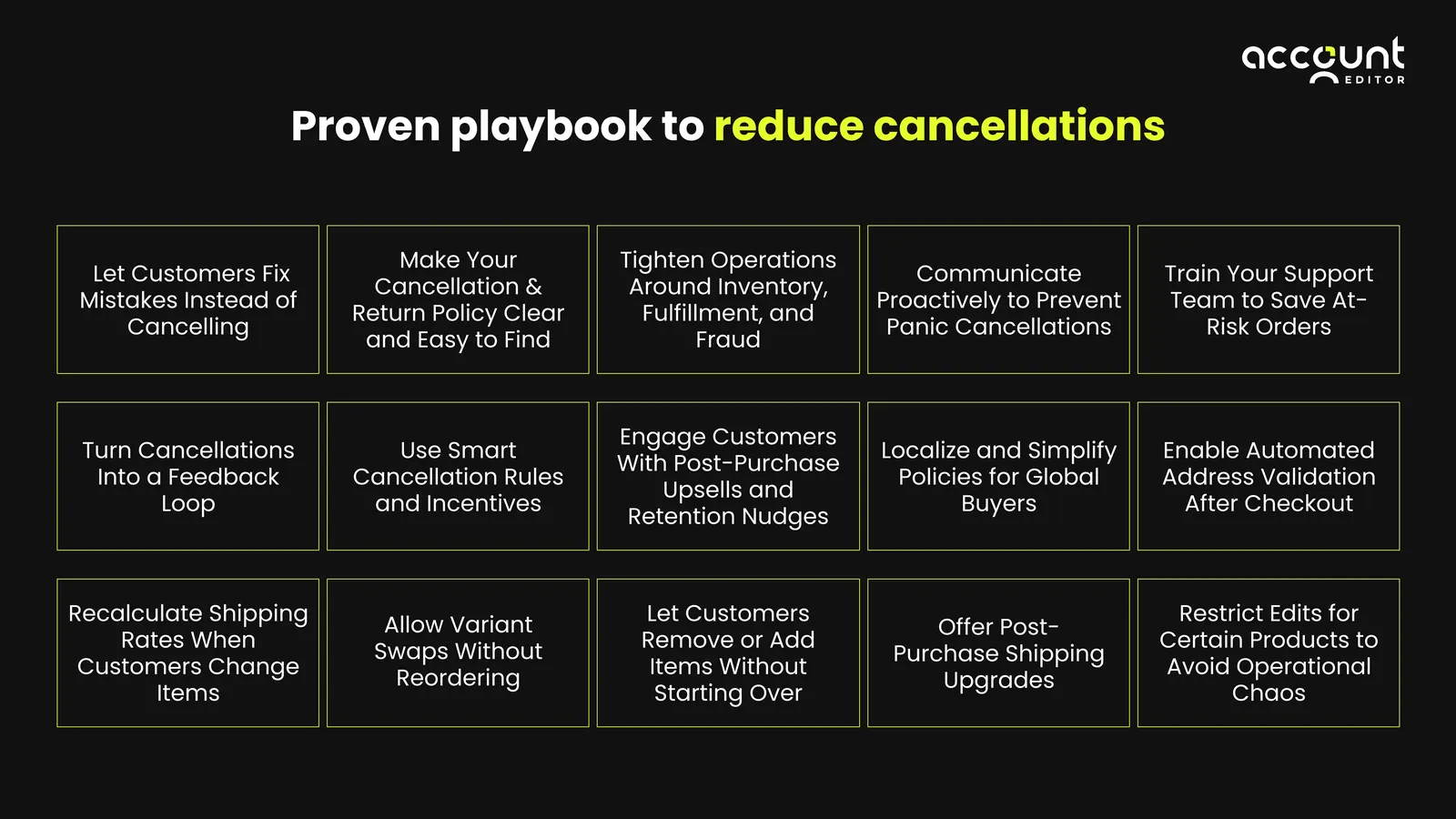
1. Let Customers Fix Mistakes Instead of Cancelling
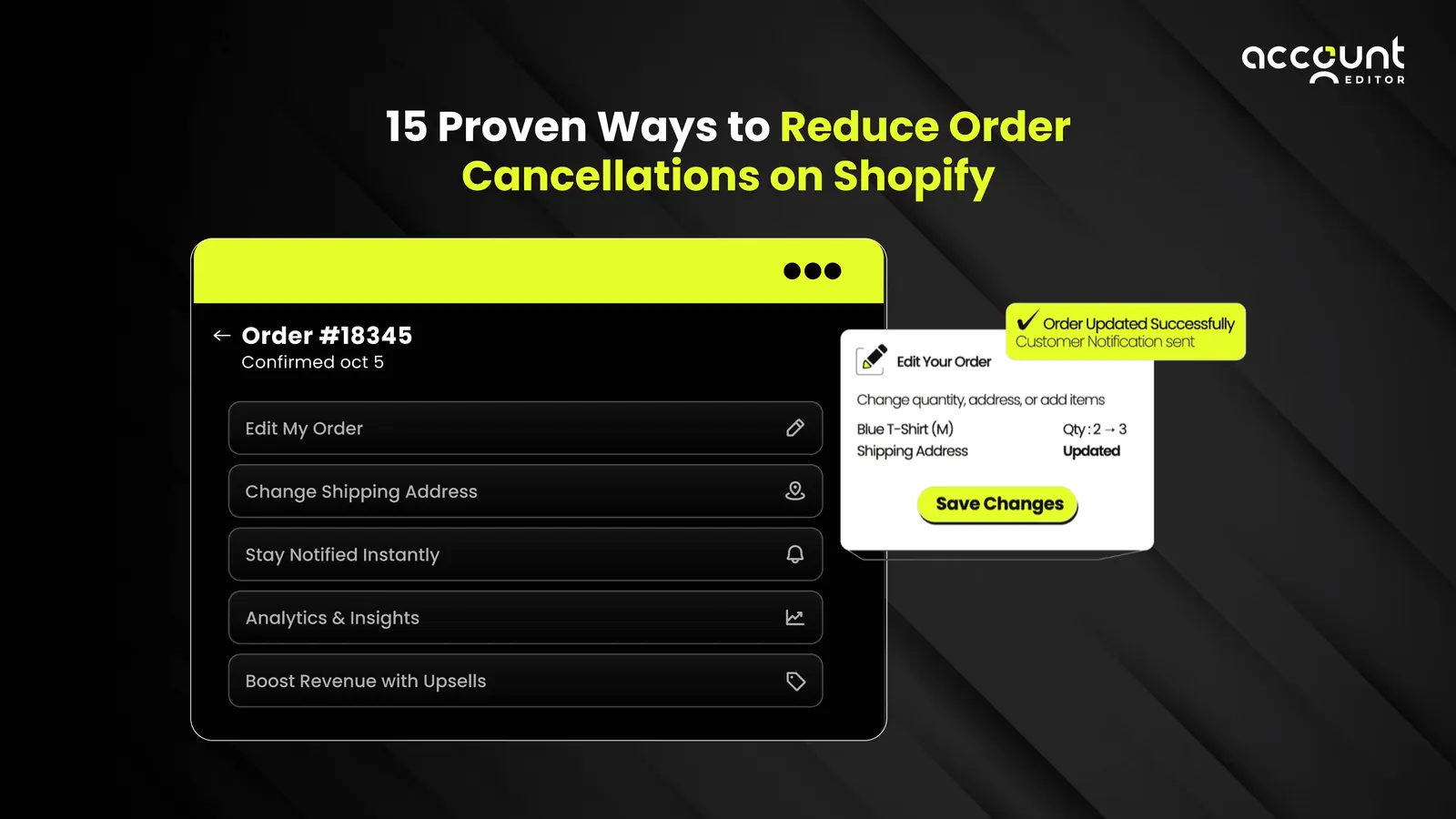
Many cancellations happen because customers notice errors right after checkout, wrong variant, wrong address, incorrect quantity, or a missing item. When shoppers can’t correct these mistakes, cancelling feels like the only option. A flexible post-purchase editing window changes this behaviour by allowing quick corrections before fulfillment begins. Stores that offer controlled editing consistently reduce unnecessary cancellations and support tickets.
2. Make Your Cancellation & Return Policy Clear and Easy to Find
Unclear or overly strict policies create uncertainty, and uncertainty leads directly to cancellations. When shoppers don’t understand how cancellations work or what the timelines and exceptions are, they often cancel pre-emptively. A transparent, well-positioned policy reassures customers, reduces anxiety, and prevents avoidable cancellation requests.
3. Tighten Operations Around Inventory, Fulfillment, and Fraud
Operational issues like overselling, delayed picking, inaccurate stock, or prolonged fraud checks force merchants to cancel orders even when customers want them. These cancellations are fully preventable. By improving stock accuracy, syncing inventory in real time, and applying clear fulfillment and fraud rules, merchants dramatically reduce cancellations triggered by internal errors instead of customer intent.
4. Communicate Proactively to Prevent Panic Cancellations
Silence after checkout is one of the biggest triggers for cancellations. When customers receive no confirmation, no estimated delivery window, or no update about delays, they assume something is wrong and cancel to “stay safe.” Proactive communication like order confirmations, tracking updates, and transparent delay notices keeps customers confident and reduces the impulse to cancel.
5. Train Your Support Team to Save At-Risk Orders
Support agents play a large role in cancellation outcomes. When a customer reaches out with an issue, the agent can either help fix the problem or unintentionally encourage cancellation. Training support to explore the reason behind the cancellation request, offer alternatives like edits or swaps, and use the right post-purchase tools leads to higher order recovery rates and fewer lost sales.
6. Turn Cancellations Into a Feedback Loop
Behind every cancellation is a pattern, wrong expectations, slow shipping zones, specific SKUs, or acquisition channels prone to regret-driven purchases. Tracking and categorizing cancellation reasons creates a feedback loop that improves product pages, policies, and fulfillment workflows. Merchants that treat cancellations as a source of insight rather than a one-off event see sustained reductions in cancellation rates.
7. Use Smart Cancellation Rules and Incentives
Limit cancellations to the period before fulfillment begins, so changes happen when they’re operationally low-cost. For late-stage requests, apply a small restocking or processing fee to cover handling and discourage unnecessary reversals. These simple rules reduce last-minute cancellations while keeping the experience fair and transparent.
8. Engage Customers With Post-Purchase Upsells and Retention Nudges
Engagement after checkout reduces remorse and strengthens commitment. When customers interact with add-ons, upgrades, or personalized offers, their likelihood of cancelling drops. Post-purchase upsells boost AOV and create a stronger emotional “yes,” which naturally reduces cancellations driven by hesitation or second thoughts.
9. Localize and Simplify Policies for Global Buyers
International customers cancel more often when policies, editing windows, or fees aren’t adapted to their region. Localized expectations reduce confusion and make global shoppers less likely to cancel. Clarity in their language builds trust and reduces friction across borders.
10. Enable Automated Address Validation After Checkout
Many cancellations happen when shipping carriers can’t verify an address or when customers realize their address was incomplete. Allowing automated post-purchase address validation and corrections dramatically reduces failed deliveries and last-minute cancellations.
11. Recalculate Shipping Rates When Customers Change Items
Cancellations often occur when changing an item increases or decreases shipping cost, and customers want clarity before finalizing changes. Offering dynamic shipping recalculation after edits helps shoppers adjust confidently without cancelling.
12. Allow Variant Swaps Without Reordering
Customers frequently cancel when they want a different size or color. Enabling frictionless post-purchase variant swaps removes the need for a full cancellation and repurchase, significantly lowering churn from sizing mistakes.
13. Let Customers Remove or Add Items Without Starting Over
Orders with multiple SKUs see higher cancellation rates because customers prefer cancelling the whole order rather than contacting support to adjust one item. Allowing post-purchase item additions or removals keeps the order intact and reduces churn.
14. Offer Post-Purchase Shipping Upgrades
When customers realize standard shipping may not arrive in time, they often cancel and reorder with express delivery. Giving them an immediate post-checkout upgrade option prevents this avoidable cancellation loop.
15. Restrict Edits for Certain Products to Avoid Operational Chaos
High-risk or made-to-order items can trigger operational failures that lead to forced cancellations. Controlled edit restrictions for specific products or collections keep operations stable and reduce merchant-driven cancellations. To learn more on how self-serve order editing reduces cancellations, read our related blog.
Conclusion
Reducing cancellations isn’t about tightening rules, it’s about giving customers clarity, flexibility, and responsive operations. When you empower customers to fix simple mistakes, improve your policies, strengthen your operational workflows, and stay proactive with communication, you naturally reduce order cancellation, boost retention, and protect margins.
With Shopify’s ecosystem evolving fast, using modern post-purchase tools that offer self-service edits, smart cancellation rules, and automated guardrails is now one of the most effective ways to prevent order cancellations and deliver a frictionless customer experience.