
When Shopify introduced new customer accounts, many merchants assumed classic customer accounts would soon be phased out. The narrative around modernization and new platform features reinforced this expectation.
However, even today, many Shopify stores still use classic customer accounts intentionally. This choice is rarely about being behind the curve. Instead, it reflects careful decision-making around operational risk, customer experience, and business continuity.
Customer accounts sit at the intersection of customer experience, internal operations, and app workflows. Any change to this layer affects far more than just how customers log in. That is why many merchants continue to rely on classic customer accounts long after new alternatives become available.
How Shopify Customer Accounts Have Evolved
Shopify’s approach to customer accounts has changed over time as the platform has grown and merchant needs have become more complex. This section explains how classic customer accounts originated, why Shopify later introduced new customer accounts, and why both systems currently exist side by side.
1. Classic (Legacy) Customer Accounts Explained
Classic customer accounts are Shopify’s initial account system. Customers create an account using an email address and password, then log in to view their order history, manage addresses, and access store-specific features such as saved information.
Over time, this system became deeply embedded in Shopify’s ecosystem. Many apps, automations, and internal workflows were built with the assumption that customers authenticate through classic accounts.
Shopify now refers to these as legacy customer accounts. For many stores, classic accounts are not outdated technology. They are a stable foundation that has been tested at scale.
2. Why Shopify Introduced New Customer Accounts
Shopify introduced new customer accounts to modernize authentication and reduce friction in the login experience. The new model aims to make access simpler, especially across devices, while providing a more flexible base for future platform improvements.
However, Shopify did not force merchants to migrate immediately. Both classic and new customer accounts coexist, allowing merchants to decide when or whether a transition makes sense.
This approach reflects Shopify’s broader platform philosophy: merchants should control timing when changes impact live operations.
This coexistence is one of the clearest signals that Shopify recognizes the complexity involved in changing customer account systems.
The Real Reasons Many Shopify Stores Still Use Classic Customer Accounts
Merchants who remain on classic customer accounts usually do so for practical, experience-driven reasons. These decisions are rooted in how their business operates today, not in speculation about future features.
1. Existing Store Architecture Is Built Around Classic Customer Accounts
For established Shopify stores, classic customer accounts are rarely isolated components. They are part of a broader system that has evolved over years.
Customer tags, customer metafields, and account-based logic are often deeply intertwined with classic account behavior. These elements support segmentation, automation, and internal workflows that power daily operations.
Shopify confirms that customer records, tags, and associated data remain central to how stores function, regardless of account type.
Reworking this architecture is not a small change. It can require adjustments across apps, workflows, and internal processes. For stores with steady traffic or high order volume, making such changes introduces risk without guaranteed return.
This is one of the most important reasons many Shopify stores still use classic customer accounts.
2. Operational Stability Matters More Than New Features
From a merchant perspective, customer accounts are not primarily a UX feature. They are operational infrastructure.
Customer accounts influence how support teams identify customers, how orders are verified, and how post-purchase interactions are handled. Classic customer accounts offer predictable behavior that teams have learned to manage efficiently.
When account behavior changes, even subtly, the impact can ripple across support queues, fulfillment checks, and customer communication. Increased support tickets or customer confusion can quickly outweigh the perceived benefits of switching systems.
This is why many merchants prioritize stability over early adoption.
3. Internal Teams and Processes Depend on Familiar Systems
Customer account systems shape how internal teams operate every day.
Support teams rely on known login flows and account recovery processes. Operations teams depend on consistent customer records. Training materials and SOPs are written around existing behavior.
Migrating away from classic customer accounts often requires retraining staff, updating documentation, and revisiting escalation workflows. For lean teams or fast-growing businesses, this internal cost is significant.
By staying on classic customer accounts, teams can focus on growth and optimization rather than internal restructuring.
4. Data Continuity and Reporting Considerations
Customer accounts play a critical role in how merchants analyze customer behavior over time.
Classic customer accounts provide continuity in customer records, order associations, and analytics integrations. Many CRM and reporting tools depend on this consistency.
Shopify documents how customer records and order history are stored and maintained within the admin.Shopify Manual
Any disruption to customer identification can affect segmentation accuracy, retention analysis, and lifetime value tracking. Data-driven merchants are understandably cautious about changes that could fragment reporting.
Post-Purchase Workflows No Longer Require Migrating to New Customer Accounts
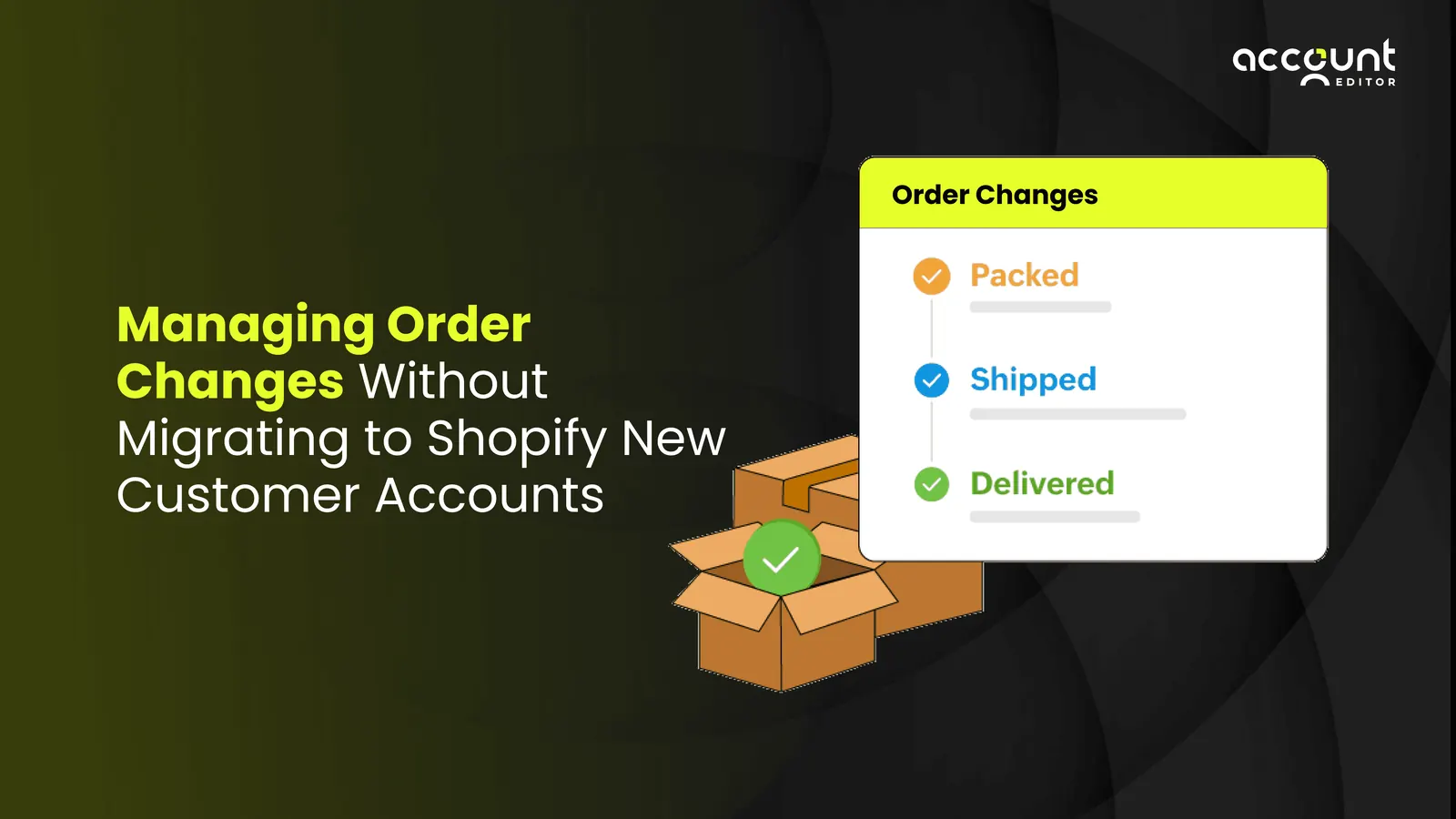
Merchants using Shopify classic customer accounts have traditionally faced limitations when trying to improve post-purchase order management. Tasks like order edits after checkout, order cancellations, and customer-requested changes often resulted in support tickets, manual refunds, or pressure to migrate to Shopify's new customer accounts.
That limitation no longer applies.
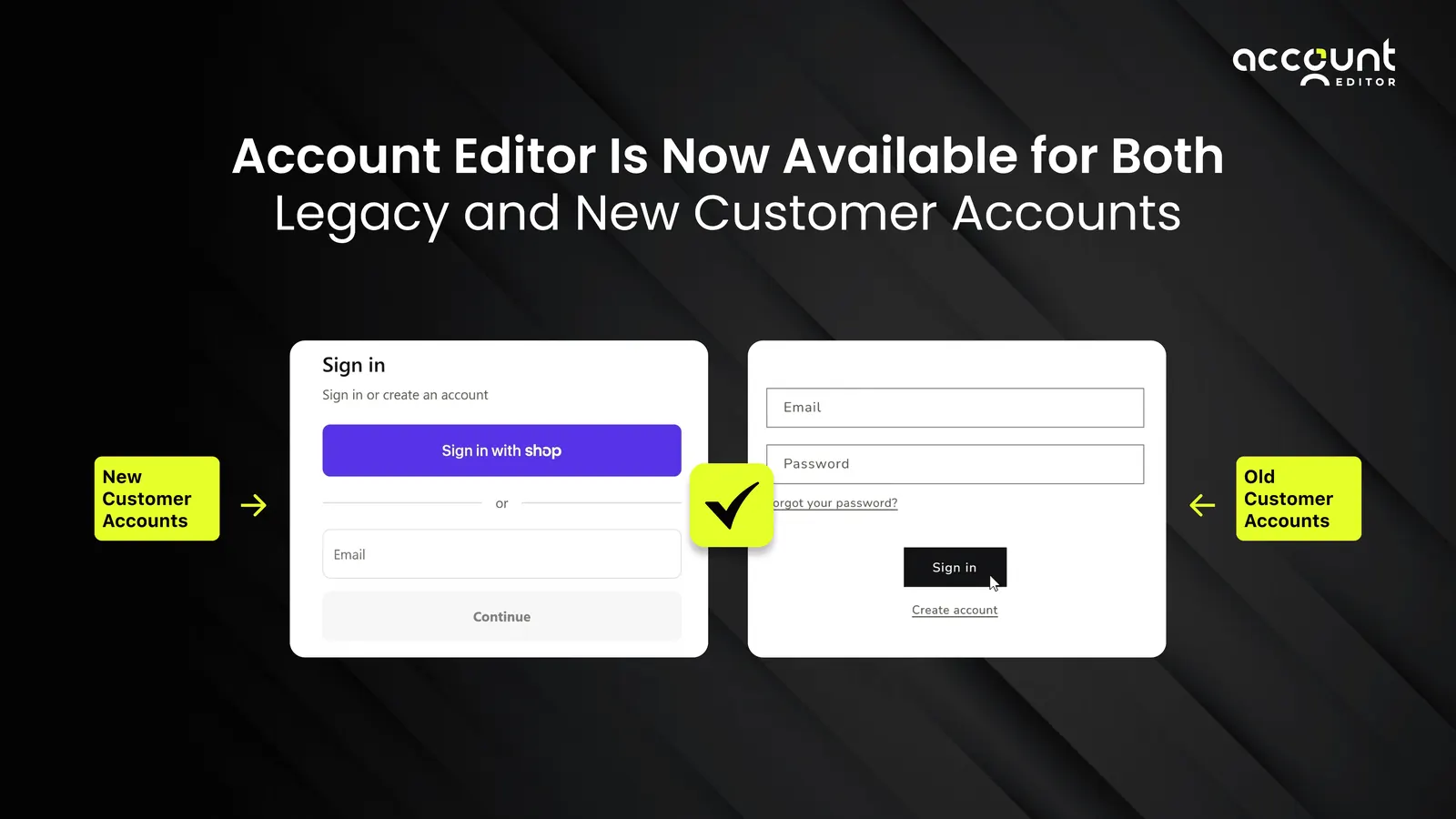
Merchants can now manage post-purchase order changes on legacy (classic) customer accounts without migrating to new customer accounts. Account Editor now supports Shopify legacy customer accounts, enabling customer self-service order edits, controlled cancellations, and post-checkout adjustments while keeping existing customer login flows, account behavior, and internal workflows unchanged.
Because these post-purchase actions operate through secure order status pages rather than customer account dashboards, merchants can reduce order cancellations, lower support ticket volume, and maintain operational stability while continuing to use classic customer accounts on Shopify.
Why B2B and Wholesale Stores Often Stay on Classic Customer Accounts
B2B and wholesale stores rely on customer accounts for more than just login access. They use them to manage pricing, permissions, approvals, and buyer relationships. This section explains why the predictability and control offered by classic customer accounts continue to matter for B2B operations, where stability and accuracy are critical.
1. Complex Login and Access Rules
B2B and wholesale stores use customer accounts to control access, pricing, and purchasing permissions.
These setups often involve buyer-level access, approval workflows, and company-specific logic. Shopify’s B2B documentation highlights the importance of customer access control in wholesale workflows.
Help manual shopify
Classic customer accounts offer predictable behavior for these requirements, which is why many B2B merchants continue to rely on them.
2. Predictability Is Critical in B2B Operations
B2B transactions are typically high-value and operationally sensitive. Errors can affect contracts, relationships, and fulfillment timelines.
Classic customer accounts integrate reliably with existing sales processes, approval flows, and external systems. For B2B merchants, stability often outweighs the appeal of adopting new account models early.
Migration Risks Merchants Actively Try to Avoid
Switching customer account systems can impact how customers log in, how teams handle support, and how connected workflows behave. This section outlines the common risks merchants consider before migrating, including customer confusion, support spikes, and operational disruptions, and why many choose to delay changes until the timing is right.
1. What Happens to Existing Customers During a Switch
Switching customer account systems changes how customers log in and access their information.
Merchants often worry about login confusion, forgotten access methods, and increased support requests. These concerns are frequently discussed in the Shopify Community.
For stores with a large base of repeat customers, even small disruptions can affect trust and retention.
2. Why Migration Timing Is a Business Decision
Shopify does not enforce immediate migration to new customer accounts. Merchants can choose when to evaluate and implement changes.
This aligns with Shopify’s broader approach to rolling out major platform updates gradually, giving merchants time to prepare.
Are Classic Shopify Customer Accounts Being Deprecated?
1. What Shopify Officially Supports Today
Shopify confirms that classic customer accounts are still supported. There is no mandatory deprecation timeline. Shopify Customer account
Merchants can continue using classic accounts while monitoring platform updates.
2. How Shopify Typically Rolls Out Platform Changes
Shopify historically introduces major changes over long transition periods. This allows merchants to test, adapt, and migrate when it aligns with their business needs.
Customer accounts follow this same pattern.
When Staying on Classic Customer Accounts Makes Strategic Sense
Staying on classic customer accounts often makes sense for mature stores, heavily customized stores, B2B businesses, and teams prioritizing operational consistency.
In these cases, classic customer accounts are not a limitation. They are a proven, reliable foundation.
Conclusion
Many Shopify stores still use classic customer accounts because they support real operational needs. They integrate with existing workflows, power critical apps, and provide stability in complex environments.
New customer accounts introduce new possibilities, but adoption timing matters. For many merchants, staying on classic customer accounts is a deliberate, informed decision based on risk, readiness, and long-term priorities.
Classic does not mean outdated. In many Shopify stores, it means dependable.
If your store relies on classic customer accounts, improving post-purchase workflows without disrupting existing systems matters. Account Editor helps Shopify merchants manage order changes and customer self-service after checkout, without forcing changes to how customer accounts work.