What Are Customer Accounts in Shopify? A Beginner-Friendly Explanation
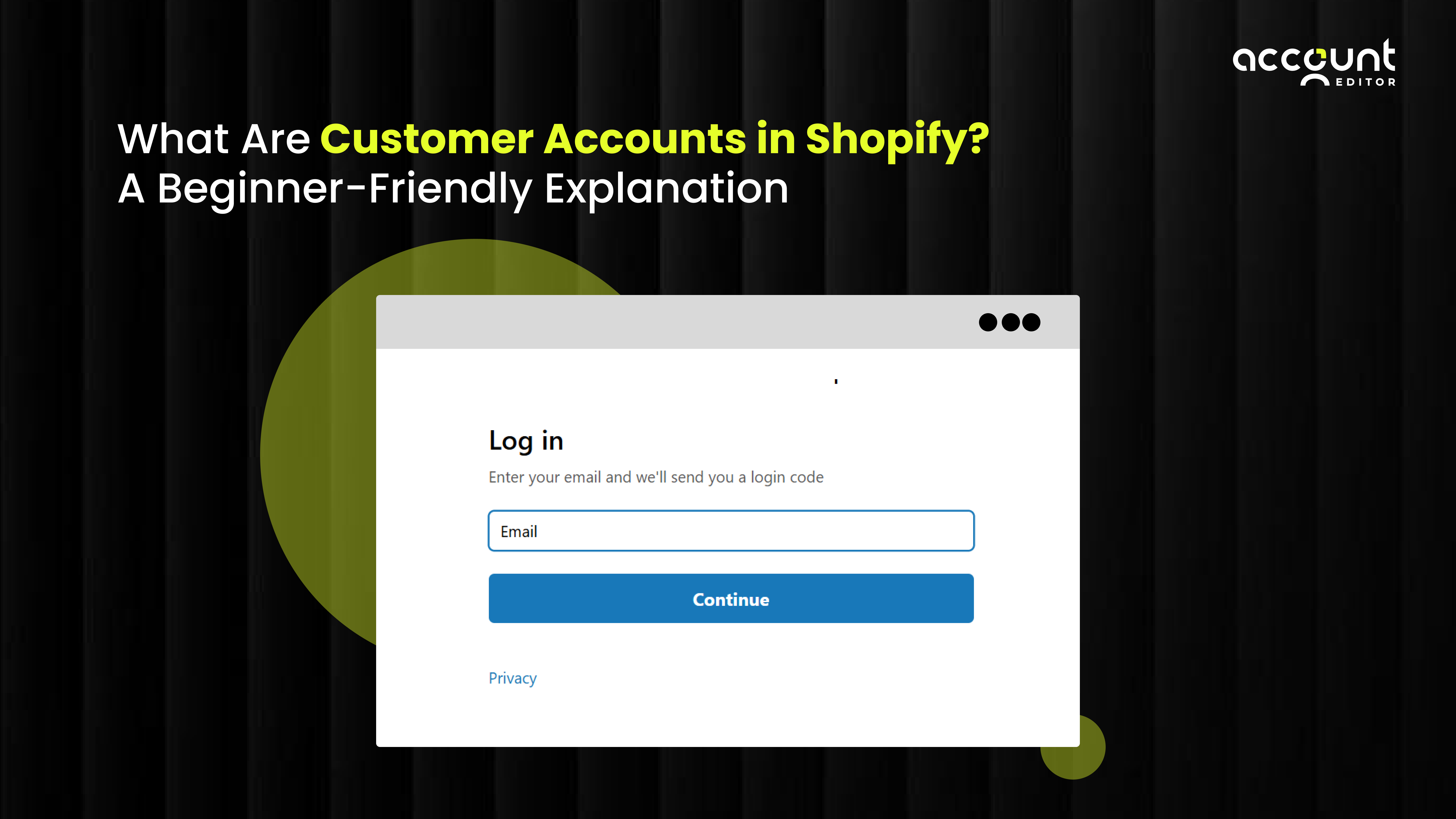
Many merchants turn on customer accounts during Shopify setup without fully understanding what they do, how they work, or whether they actually help the business.
This beginner-friendly guide explains what customer accounts are in Shopify, why they exist, how they work behind the scenes, and how Shopify’s new customer accounts differ from classic (legacy) customer accounts. The goal is to help Shopify merchants understand the system clearly so they can make informed decisions that align with their store model, customer behavior, and operational workflows.
What Are Customer Accounts in Shopify?
1. What a Shopify Customer Account Is
A customer account in Shopify is a personal login area that allows shoppers to access information related to their orders and profile. Instead of checking out as a guest every time, customers can log in using an account tied to their email or identity.
From the Shopify admin side, a customer account creates a persistent customer profile. This profile stores order history, contact details, and other account-related information in a single record.
In simple terms, customer accounts enable Shopify to recognize returning customers and provide them with a platform to manage their relationship with the store.
2. What a Customer Can Do With a Shopify Account
What customers can do inside a Shopify account depends on which account system the store uses, but common actions include:
Viewing past and current orders
Tracking order status and shipments
Managing saved addresses or contact details
Accessing invoices or receipts
Logging in without re-entering information on every visit
For customers, accounts reduce friction and uncertainty after checkout. For merchants, they create continuity across multiple purchases.
Why Shopify Customer Accounts Matter for Merchants
1. Impact on Customer Experience and Repeat Purchases
Customer accounts play an important role in shaping the post-purchase experience. When customers can log in and see their order history, track shipments, or confirm past purchases, they feel more confident interacting with the store again.
This matters most for businesses that rely on repeat purchases, such as DTC brands, subscription-based stores, or merchants selling replenishable products. A customer account becomes a familiar touchpoint rather than a one-time checkout event.
Accounts also support faster repeat checkouts. Returning customers do not need to start from scratch, which reduces friction and supports higher lifetime value.
2. Impact on Support and Operational Efficiency
Customer accounts also affect internal operations, especially customer support.
Without accounts, customers often reach out to support for basic information such as order status, invoices, or confirmation details. With accounts enabled, many of these questions can be resolved through self-service.
For support teams, this means:
Fewer repetitive tickets
Fewer manual order lookups
Clearer customer context during conversations
Over time, this improves response efficiency and reduces operational overhead.
How Customer Accounts Work in Shopify
1. Customer Login and Access Flow
In Shopify, customer accounts are tied to the checkout and order lifecycle. When a customer completes a purchase, Shopify associates that order with a customer record.
Depending on the account type:
Customers may log in using an email and password (classic accounts)
Or use a passwordless login method, such as a one-time code (new customer accounts)
Once logged in, customers are routed to their account area, which displays relevant order and profile information.
2. Customer Account Pages and Dashboard Overview
The customer account page acts as a central dashboard. From here, customers can review their orders and account-related details.
For merchants, this dashboard is not just a convenience system. It is a controlled environment where Shopify governs what customers can see and do, ensuring consistency across devices and sessions.
The design and functionality of this dashboard vary significantly between classic and new customer accounts, which makes understanding the difference important.
Types of Customer Accounts in Shopify
1. New Customer Accounts in Shopify
New customer accounts are Shopify’s modern account system. They are designed to be more secure, mobile-friendly, and aligned with Shopify’s long-term platform direction.
Key characteristics include:
Passwordless login using one-time email codes
A standardized account interface managed by Shopify
Support for newer Shopify features and extensions
These accounts prioritize ease of access for customers and reduce issues related to forgotten passwords or account lockouts.
2. Classic (Legacy) Customer Accounts in Shopify
Classic customer accounts are the older account system that has existed in Shopify for many years.
They rely on:
Email and password-based login
Theme-based customization using Liquid templates
Greater flexibility but more manual setup
While classic accounts offer more customization options, they also require more maintenance and are less aligned with Shopify’s newer ecosystem.
Shopify New vs Classic Customer Accounts
1. Login Experience and Security Differences
The most visible difference is how customers log in.
Classic accounts use passwords, which customers must remember and manage. This can lead to password resets and login issues.
New customer accounts use passwordless authentication, typically sending a one-time code to the customer’s email. This simplifies access and reduces login friction, especially on mobile devices.
2. Feature Availability and Customization Limitations
New customer accounts are more standardized. Merchants have less control over layout and design but benefit from consistent updates and compatibility.
Classic accounts allow deeper customization through theme files, but this flexibility comes with technical complexity and maintenance costs.
Merchants must decide whether customization or stability matters more for their store.
3. App Compatibility and Extension Support
Many newer Shopify features and extensions are designed with new customer accounts in mind. Some apps integrate more smoothly with the new system, while others still rely on classic account structures.
This makes account choice an ecosystem decision, not just a customer-facing one.
For a deeper look at how Shopify new customer accounts differ from classic customer accounts, see our detailed comparison guide.
https://www.accounteditor.com/blog/shopify-new-vs-classic-customer-accounts
Shopify Customer Accounts vs Guest Checkout
1. When Customer Accounts Make Sense
Customer accounts are most valuable when:
Customers buy repeatedly
Order history matters to the shopper
Post-purchase self-service reduces support load
Stores selling subscriptions, consumables, or B2B products often benefit from accounts.
2. When Guest Checkout May Be Better
Guest checkout can be better when:
Purchases are mostly one-time
Speed and simplicity matter more than retention
Customers are unlikely to return
In these cases, forcing account creation may add unnecessary friction.
Common Limitations of Shopify Customer Accounts
1. Platform and Customization Constraints
Shopify controls many aspects of customer accounts, especially in the new system. Merchants cannot fully redesign the experience or add unlimited custom logic.
This ensures consistency but limits flexibility.
2. Operational Considerations for Support Teams
Customer accounts do not eliminate support work entirely. They shift it. Teams must understand how account data is structured and what customers can see to provide effective assistance.
Which Shopify Stores Benefit Most From Customer Accounts
1. DTC, Subscription, and Repeat-Purchase Stores
These stores benefit the most because of accounts:
Encourage repeat engagement
Support self-service
Build familiarity over time
2. B2B and Wholesale Shopify Stores
For B2B stores, accounts are often essential. They support:
Ongoing customer relationships
Repeated orders
Structured customer access
Final Perspective: Understanding Customer Accounts as Part of the Shopify Ecosystem
Shopify customer accounts are more than a login feature. They shape how customers interact with your store after checkout and how much manual work your team handles.
New customer accounts prioritize self-service and scalability. Classic customer accounts prioritize simplicity and legacy compatibility. Neither option is automatically right or wrong.
When you understand how customer accounts fit into your Shopify workflows, you can make informed decisions that reduce friction, improve operational efficiency, and create a better long-term experience for both your customers and your team.